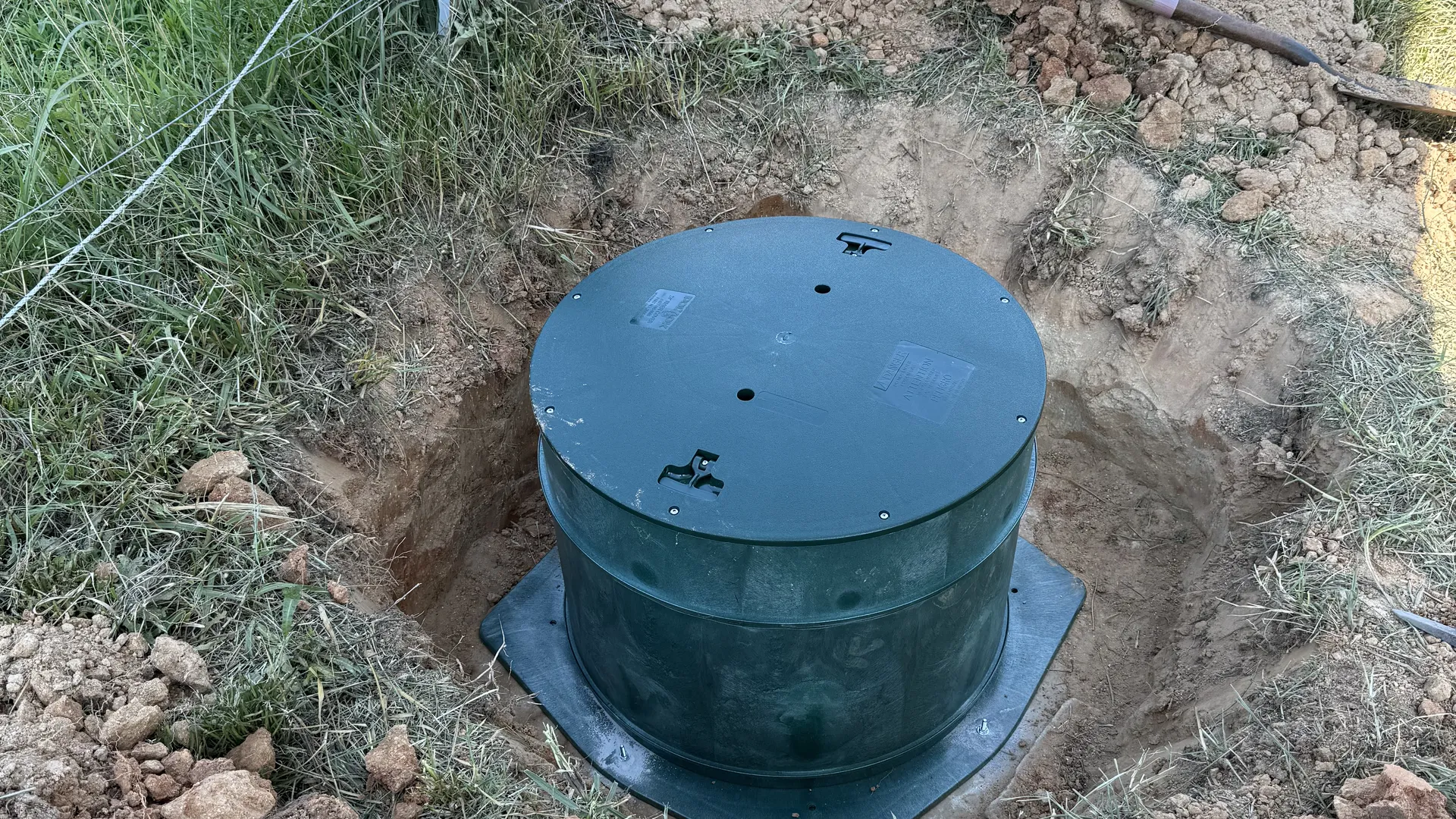
How much does drain field replacement cost in North Carolina?
National cost guides put a septic drain field replacement at about $3,000 to $15,000. Replacing the tank and the field together runs about $5,000 to $12,000. The EPA gives a similar figure. It says repairing or replacing a malfunctioning conventional system can cost $5,000 to $15,000.
North Carolina numbers land in that same band. One national guide’s Charlotte page puts a septic tank replacement at $4,865 to $11,676, with an average near $5,838. County permit fees and site work sit on top of that.
Every number here is a published market figure, not our price list. Everclear does not replace drain fields and does not install new septic systems. When a field is clogged but the tank and lines are sound, there is a second path. This page shows where it fits.
What does drain field replacement cost right now?
Here is what published 2026 cost guides and public agencies report. Prices move with soil, slope, access and the size of the field.
| Work | Published range | Kind of source |
|---|---|---|
| Drain field (leach field) replacement | $3,000 to $15,000 | National cost guides, 2026 |
| Drain field repair or new leach lines | $1,000 to $5,000 | National cost guides, 2026 |
| Septic tank and drain field replaced together | $5,000 to $12,000 | National cost guides, 2026 |
| New septic tank on its own | $3,000 to $10,000 | National cost guides, 2026 |
| Repair or replacement of a failed conventional system | $5,000 to $15,000 | The EPA |
| Septic tank replacement, Charlotte, NC | $4,865 to $11,676 (average $5,838) | A national guide’s North Carolina page |
| Drain field lines | $20 to $45 per linear foot | National cost guides, 2026 |
| Permits for a drain field replacement | $450 to $2,000 | National cost guides, 2026 |
| Excavation | $1 to $5 per square foot | National cost guides, 2026 |
| Regrading the yard afterward | $1,000 to $3,300 | National cost guides, 2026 |
The spread is wide because no two yards match. A flat lot with sandy loam and easy access sits at the low end. A sloped lakefront lot with red clay and mature trees sits at the top. That gap is why biological drain field restoration is worth pricing out first.
Why does a septic system replacement cost more in North Carolina?
Soil drives the number up first. Red clay subsoils across the Piedmont drain slowly. A conventional field has to be bigger to move the same water. Bigger fields mean more trench, more stone, more pipe and more machine time.
The permit path adds more. Iredell County publishes its septic permit fees online. Its improvement permit guide lists a zoning fee of $77.25. A gravity septic permit runs $500 and a pump septic permit runs $1,200.
Those fees cover a new, relocated or expanded system. The county adds $100 for a site re-visit when a lot is not ready. Fees change, so confirm current amounts with your county health department.
Then there is the soil evaluation itself. Iredell County requires backhoe pits for any application needing one. All utilities must be marked through NC 811 before digging. Property lines have to be staked by a licensed North Carolina surveyor.
That is survey work, machine time and a scheduled county visit before the first trench. An inspection of the tank and the field costs a small fraction of that. It often answers the question first.
The county side has a bright spot. Iredell County Health Department materials say it evaluates failing septic systems at no charge and issues septic repair permits.
What does a whole new septic system cost?
Septic tank installation cost depends on what your soil will accept. Published 2026 guides report these installed ranges.
| System type | Published installed cost |
|---|---|
| Conventional gravity system | $3,500 to $8,500 |
| Alternative system | $4,000 to $15,000 |
| Recirculating sand filter | $15,000 to $25,000 and up |
| Aerobic treatment unit (ATU) | $20,000 to $40,000 and up |
| Mound system | $25,000 to $50,000 and up |
The same guides put labor alone at $1,500 to $4,000, close to half the job. If clay or a seasonal high water table rules out a conventional field, the county can require an engineered system. The total climbs fast from there.
Those are new systems built by a septic system installer. Everclear does not build them. We say so at the evaluation when a property is headed that way.
Why do drain fields fail in the first place?
Most fields do not fail because a pipe broke. They fail because of biomat. NC State Extension describes it as a layer in the upper 1 to 6 inches of soil.
That layer sits around the drain lines. A thin one is normal and helps treat the water. When solids keep washing out of the tank, it thickens.
NC State Extension says a thick biomat “completely clogs the soil” so effluent cannot flow out. Once the soil is fully clogged, the publication says a new drain field is usually needed.
Water volume speeds it up. The EPA warns that excess water slows or stops the treatment process. It says to keep roof drains and sump pumps away from the field. Grease is the other field killer, and NC State Extension says it can ruin a drain field.
When is biological restoration the alternative to replacement?
Restoration goes after the biomat instead of the soil. A compact aeration and bacteria unit is set inside the tank you already own. It goes in through the tank’s access opening.
A small air pump outside the tank pushes air through a fine-bubble diffuser. Aerobic bacteria live on growth media inside the unit and digest the solids. The treated effluent carries them out to the field, where they break down the biomat.
As the biomat thins, the soil takes water again. The field stays in the ground and the lawn stays intact.
Most installs finish in a day. The only digging is a shallow air line from the pump to the tank. That line gets located through NC 811 first. If your county health department needs to be involved, we tell you before work starts.
It does not fit every system. Crushed or collapsed lines are replacement jobs. So is a field paved over, a tank that has failed structurally, or a field sitting in groundwater.
We say so after we look. Where it does fit, service visits on a schedule keep the tank digesting solids instead of storing them. Pumping needs drop sharply as a result. North Carolina rules still call for pumping when scum and sludge together pass one third of the tank’s liquid depth.
What should a North Carolina homeowner do next?
Start with a look inside the tank before pricing new trenches. A slow drain, a gurgling toilet, a soft wet spot or a sewage smell all point at the same place. Knowing whether the soil is clogged or a pipe is broken changes the number by thousands.
Everclear is based in Statesville and covers about 50 miles from there. That reaches the Lake Norman towns, High Rock Lake and north Charlotte. The work is done by a North Carolina certified septic installer.
The on-site evaluation is free, and we look at the tank and the field before recommending anything. See what restoration involves step by step, or read the wider picture of septic system repair in Statesville. Call or text (336) 624-7314 to get on the schedule.